Autor

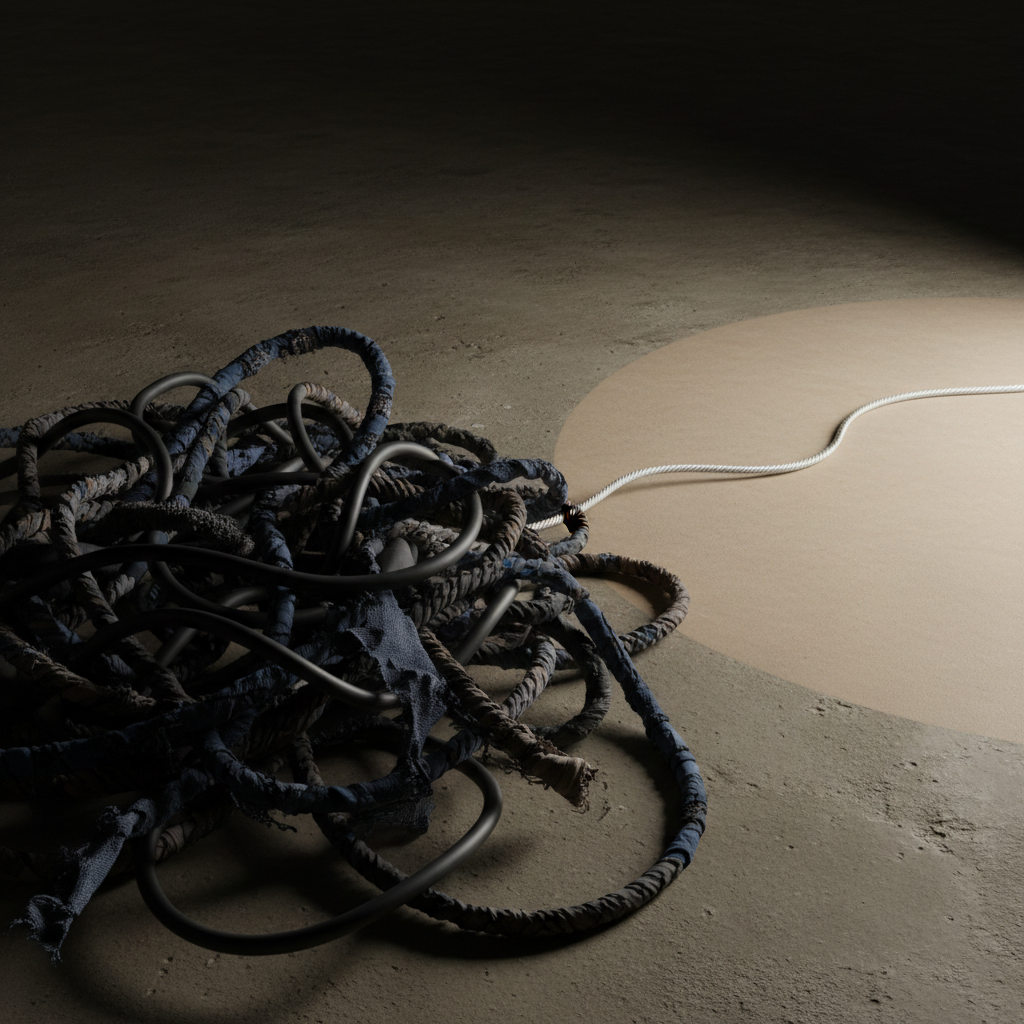
A dense, tangled mass of dark, braided cords sprawled across a rough concrete surface, each cord made of different textured materials—frayed fabric, smooth rubber, twisted paper—symbolizing intertwined toxic relationships, procrastination, and internalized criticism. From the right side, a single lighter-colored cord begins to separate, stretching toward a softly illuminated area where the concrete becomes smoother and warmer in tone. Gentle, directional lighting from the upper right creates pronounced shadows that emphasize the complexity and weight of the knots. The composition is asymmetrical, with the main knot dominating the lower left, captured at a low, close-up angle to enhance the feeling of psychological entrapment gradually giving way to clarity, in a sophisticated, realistic yet abstract style.

О аутору

Упознајте стручну и личну причу аутора која стоји иза „Токсичне психологије“.

About

О аутору и његовом приступу

Аутор „Токсичне психологије“ је психолог са дугогодишњом праксом у раду са анксиозним, депресивним и блокираним клијентима. Његов приступ спаја научна сазнања и емпатију, са фокусом на разумевању корена унутрашњих конфликата.

A textured, abstract representation of a human mind as a cracked porcelain sphere, its surface etched with fine, branching lines like fragile fault zones. From some fissures, soft muted colors seep out—dusty blues for anxiety, desaturated violets for depression, pale amber for hidden strength—blending into a surrounding field of layered paper textures. The sphere rests on a dark, velvety surface, illuminated by diffused side lighting that reveals every subtle imperfection in the glaze. The atmosphere is contemplative and sophisticated, balancing darkness and hope. Shot at eye level with a shallow depth of field so the background melts into soft, grainy texture, evoking a complex inner psychological landscape without depicting any people or text.
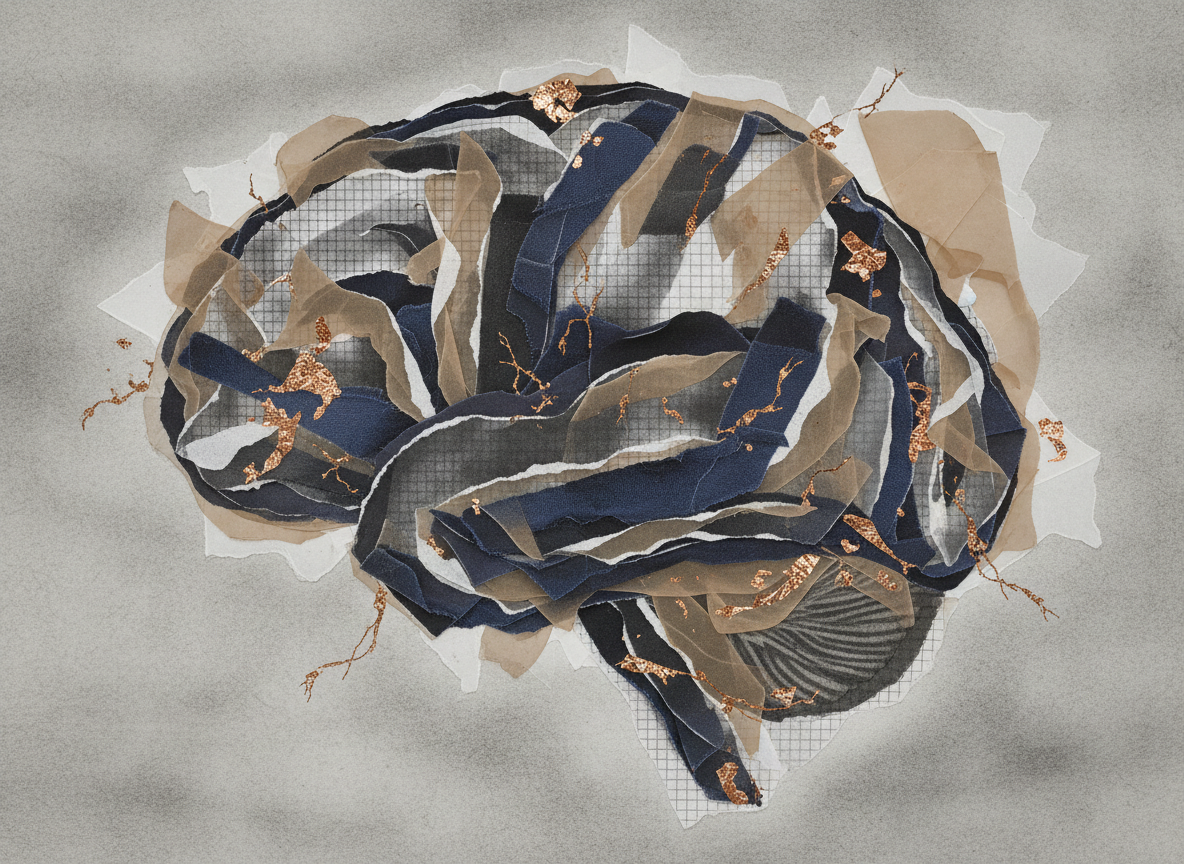
An intricate, layered collage of textured papers, torn fabric, and translucent vellum shapes arranged to resemble an abstract brain from above. Each overlapping layer features subtle patterns—faint grids for control, smudged charcoal for depression, delicate gold leaf fractures for narcissistic fragility. Soft, overhead studio lighting creates nuanced shadows between the layers, accentuating depth and complexity. The color palette is restrained: smoky grays, faded indigo, warm taupe, and small accents of metallic copper. Shot from a bird’s-eye view with sharp focus that captures every fiber and tear, the composition feels orderly yet fragile, evoking sophisticated psychological analysis of dysfunctional patterns while avoiding any literal human imagery or typography.
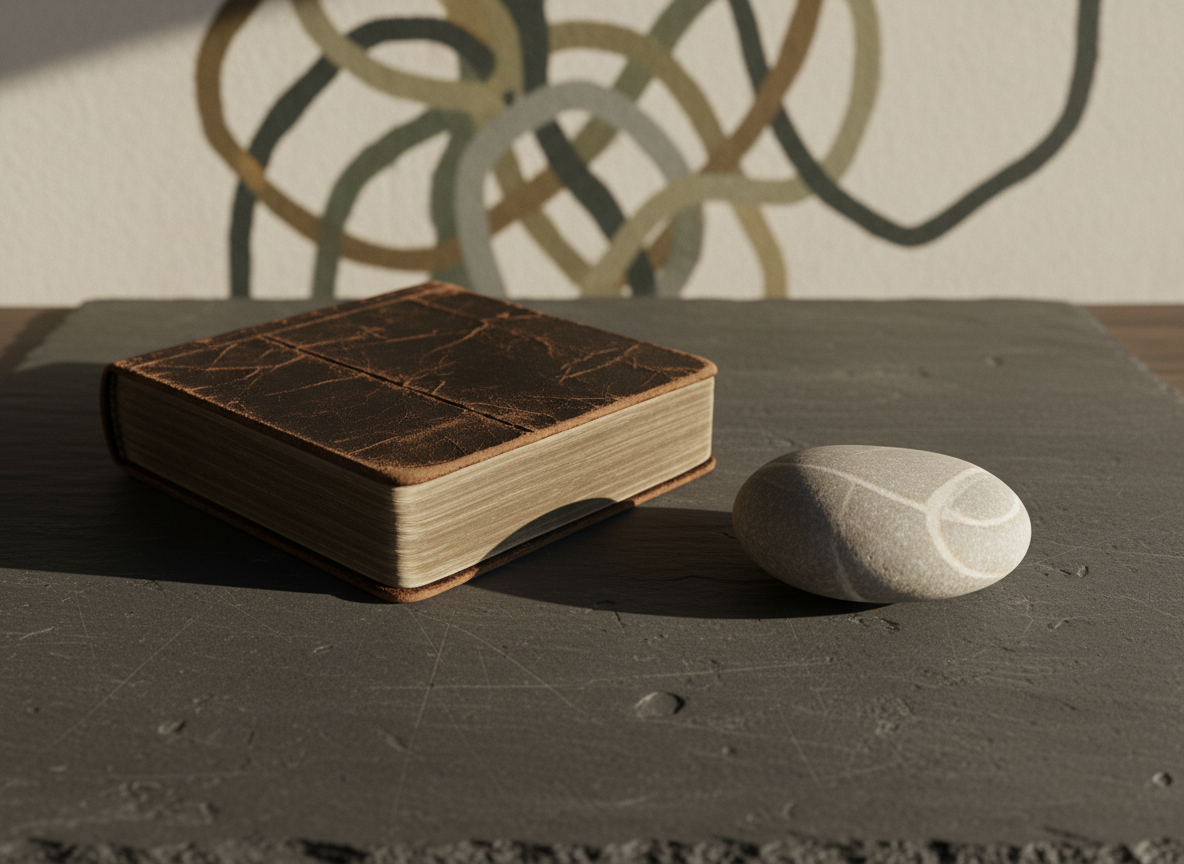
A minimalist writing desk scene rendered with rich textures: a worn leather-bound journal lying slightly open, its thick, rough-edged pages creating deep shadows between them. Beside it, a smooth river stone with subtle natural striations sits on a slate surface that shows fine scratches and matte irregularities. Diffused afternoon light falls diagonally across the desk, producing a calm, introspective mood, with soft highlights on the leather grain and stone. In the blurred background, abstract shapes on a textured wall hint at tangled thought patterns slowly coming into focus. Framed from a slightly elevated angle, the composition suggests the process of unpacking toxic psychological history and emotional blocks through reflection, without any visible text or human presence.
A heavy, antique wooden door seen in close-up, its surface covered with layers of peeling paint that reveal different muted colors beneath—symbolizing layers of personal history and toxic patterns. Fine hairline cracks in the paint resemble nervous system pathways. Soft, cool daylight grazes the door from the left, emphasizing the raised textures and casting gentle shadows into the crevices. Around the edges, the environment fades into a blurred, textured wall suggesting an undefined past. The composition uses the rule of thirds, focusing on an old, slightly tarnished keyhole as the psychological “entry point.” The mood is introspective and slightly tense, yet sophisticated, rendered in a realistic, tactile style that invites contemplation about the roots of anxiety and emotional blockages.

Медији

Интервјуи, подкасти и стручни текстови о аутору продубљују теме књиге: порекло анксиозности, депресије, нарцисоидности и унутрашње празнине, као и утицај раних односа на развој аутентичности.

A dense, tangled mass of dark, braided cords sprawled across a rough concrete surface, each cord made of different textured materials—frayed fabric, smooth rubber, twisted paper—symbolizing intertwined toxic relationships, procrastination, and internalized criticism. From the right side, a single lighter-colored cord begins to separate, stretching toward a softly illuminated area where the concrete becomes smoother and warmer in tone. Gentle, directional lighting from the upper right creates pronounced shadows that emphasize the complexity and weight of the knots. The composition is asymmetrical, with the main knot dominating the lower left, captured at a low, close-up angle to enhance the feeling of psychological entrapment gradually giving way to clarity, in a sophisticated, realistic yet abstract style.